
Why Do I Feel Like a Failure? Understanding the Feeling and What to Do About It

If you keep thinking, “I feel like a failure,” it can be difficult to separate what has happened in your life from what you believe it says about you. A disappointing result, a relationship ending, financial pressure, or the feeling that everyone else is moving ahead may start to look like proof that you are not good enough.
If setbacks have made you question your self-worth, read our guide to understanding why you feel not good enough.
But feeling like a failure is not the same as being one. It is an emotional experience, not an objective assessment of your worth. Sometimes it follows a specific setback. At other times, perfectionism, comparison, prolonged stress, or mental-health difficulties can make that feeling persist even when nothing dramatic has gone wrong.
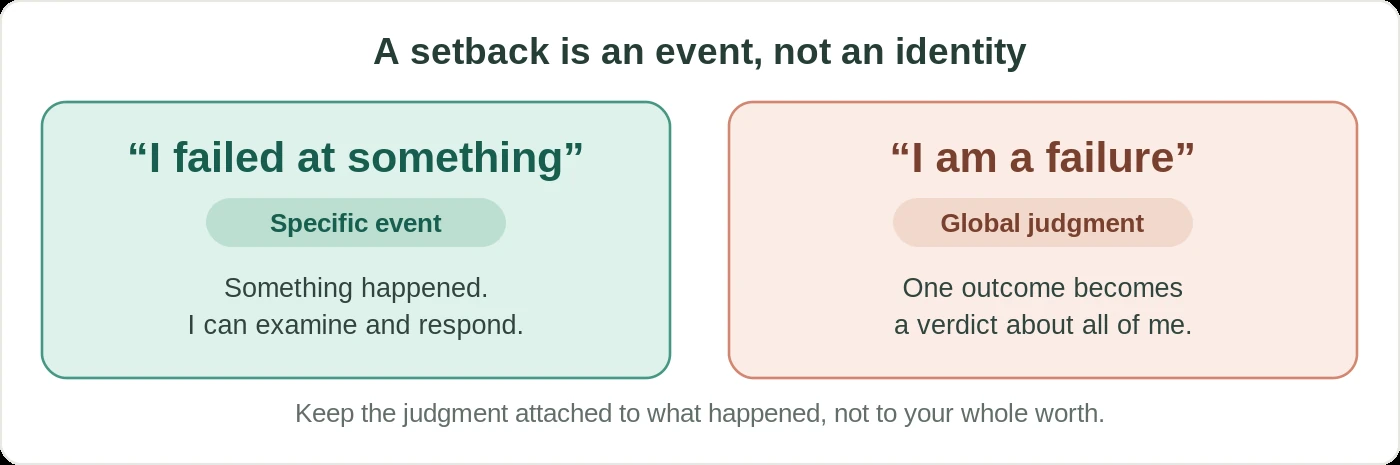
The distinction worth keeping in mind is simple: “I failed at something” describes an event. “I am a failure” judges your entire identity. This article explains seven common reasons for that shift, how to respond without denying real problems, and when it is worth seeking professional support.
Why do I feel like a failure in life?
Often, the feeling develops when there is a gap between where you expected to be and where you think you are. You may have an idea of the job, income, relationships, home, or confidence you should have by a particular age. When life does not follow that plan, disappointment can turn into self-judgment.
If setbacks have affected your confidence, explore our guide to understanding why you’ve lost confidence in yourself.
That gap can also arise when you have made a genuine mistake, someone important has criticized you, or exhaustion leaves you less able to see your situation fairly. None of these experiences automatically defines your ability or your future.
Consider two reactions to the same event:
- Event: “I did not get the job I applied for.”
- Identity judgment: “I will never get a good job because I am a failure.”
The first statement describes something that happened. The second predicts the future and assigns a permanent label to the person. Although the disappointment may be real, the wider conclusion does not necessarily follow.
Seven common reasons you might feel like a failure
These explanations can overlap. They are not diagnoses, and the presence of one does not mean it is the only reason you feel this way.
1. You are measuring yourself against an unrealistic timeline
It is easy to believe that adulthood should unfold in a particular order: finish your education, find stable work, become financially independent, have a relationship, and reach a series of milestones. But real lives are affected by opportunities, health, family duties, the economy, and decisions that cannot be predicted years in advance.
You might think, “I should be earning more by 30,” “I should own a home by now,” or “I should know what I want to do with my life.” Those expectations can become painful when they are treated as universal deadlines rather than preferences that may need adjusting.
If the pressure to meet certain milestones has left you feeling unable to move forward, read our guide to understanding why you feel stuck in life and how to take your next step.
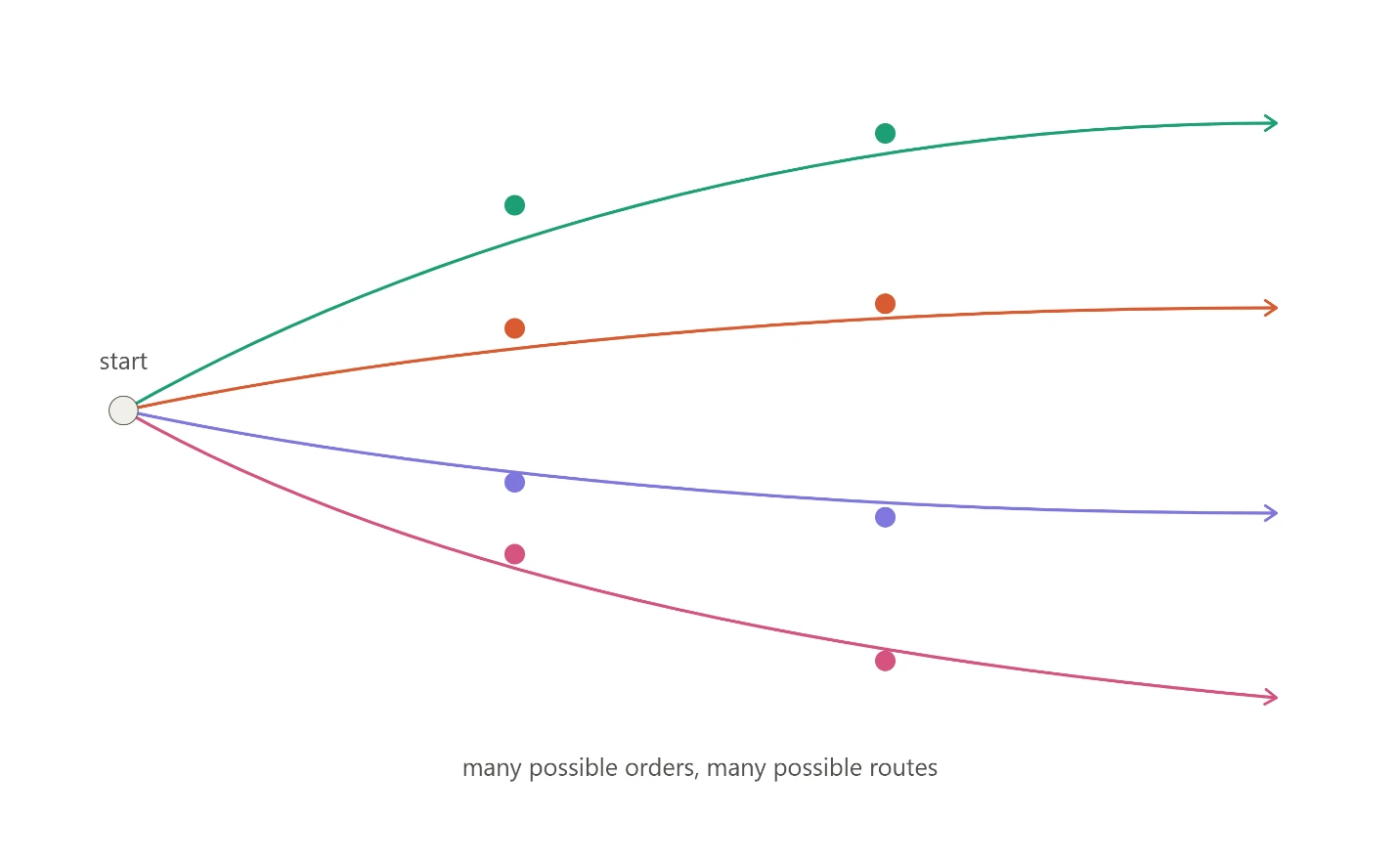
Try asking: Whose timeline am I following? Is the milestone important to me, or have I absorbed someone else’s idea of success? What would reasonable progress look like under my current circumstances?
You do not have to give up ambition. You can pursue meaningful goals without treating every missed deadline as evidence of personal inadequacy.
2. Perfectionism is turning mistakes into judgments about your worth
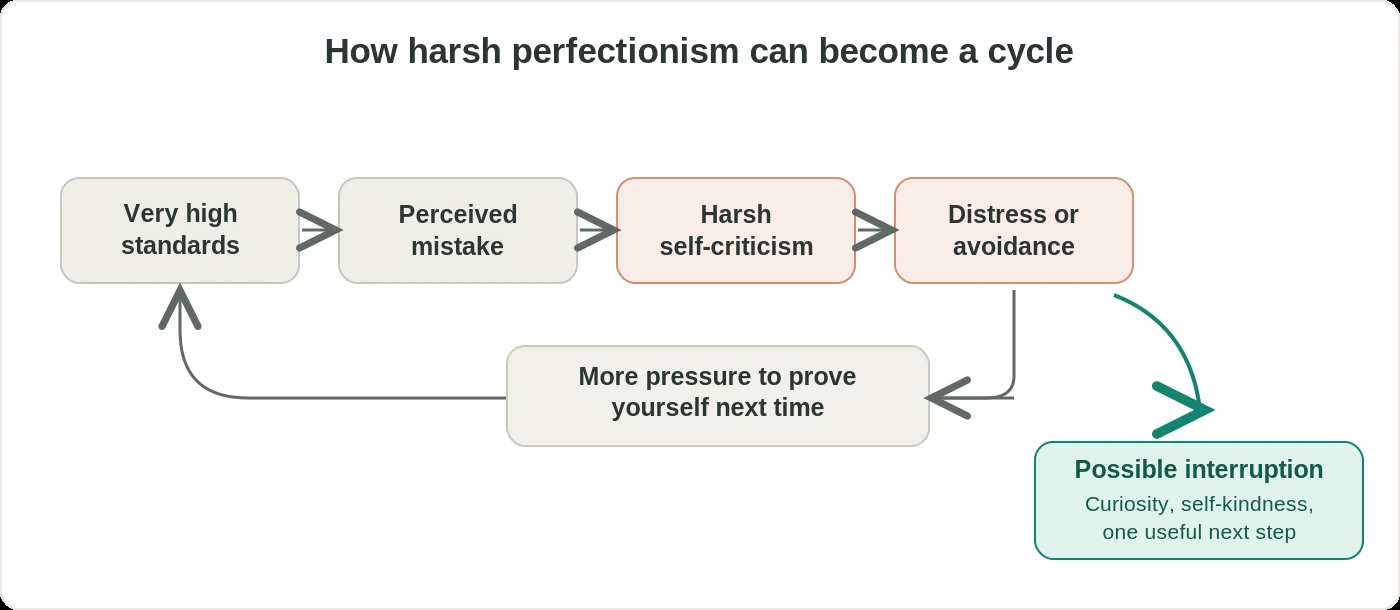
Having high standards is not necessarily unhealthy. The difficulty arises when anything less than an ideal outcome feels unacceptable, or when one mistake leads you to question your whole character.
Researchers distinguish between perfectionistic strivings, such as setting demanding standards, and perfectionistic concerns, such as excessive worry about mistakes and perceived criticism. In a 2024 systematic review and meta-analysis of 416 studies involving 113,118 participants, Callaghan and colleagues reported stronger associations between perfectionistic concerns and symptoms of depression, anxiety, and obsessive-compulsive disorder than between those symptoms and perfectionistic strivings. These are associations, not proof that perfectionism is the sole cause of a mental-health condition.
A separate meta-analysis of 67 longitudinal studies by Smith and colleagues found a two-way relationship between perfectionistic concerns and depressive symptoms: each predicted increases in the other over time. That helps explain why criticism and distress can sometimes reinforce one another.
| A workable standard | A harsh self-judgment |
|---|---|
| “I want to improve.” | “I must never make a mistake.” |
| “That attempt did not work.” | “I am terrible at everything.” |
| “What can I learn?” | “How could I be so stupid?” |
| “This matters to me.” | “My worth depends on succeeding.” |
If you recognize the second column, the first step is not to lower every goal. It is to notice the difference between evaluating performance and attacking yourself.
3. You are comparing your whole life with someone else’s visible successes
Comparison can be useful when it gives you information. It becomes draining when someone else’s achievement is treated as proof that your life has less value.
Social media can make that easier to do. You might see a promotion but not the years of rejected applications, a new home but not the financial commitments, or a happy relationship photo without knowing what the relationship is like in private. You are comparing what you know about your own life with a limited view of someone else’s.
A 2020 systematic review by McCarthy and Morina found meaningful links between social comparison and depression or anxiety in clinical and subclinical samples. Its findings should not be read as proof that comparison causes a disorder in every population. More recently, Le Blanc-Brillon and colleagues (2025) found that exposure to upward comparisons on social media was associated with lower self-esteem and more depressive symptoms across two young-adult samples (139 and 413 participants). The observed effects were modest, and the observational results do not prove that social-media use causes depression.
When you notice comparison starting, try a different question: “What do I admire here, and is there anything useful I can learn from it?” You can also mute accounts that regularly leave you feeling inadequate, particularly when scrolling makes it harder to return to your own priorities.
4. You are treating difficult circumstances as a personal flaw
Unemployment, rising expenses, caregiving, illness, grief, discrimination, family conflict, and limited opportunities can all make everyday progress harder. In those circumstances, “I am failing” may sound like a simple explanation, but it leaves out the conditions you are dealing with.
A 2024 meta-review by Dougall and colleagues examined 149 reviews and found evidence linking social disadvantage with poorer mental health, including stronger evidence for an association with depression. The authors also emphasized that the strength and quality of the evidence varied across measures and studies.
This does not mean you have no responsibility for your decisions. It means that a fair assessment accounts for what is realistically within your control, as well as the barriers you may be facing.
5. Your inner criticism is more severe than your actual mistake
Some self-evaluation is useful: it helps us notice patterns, repair harm, and develop skills. Constantly calling yourself useless or incompetent is different. Harsh self-criticism shifts attention away from the specific problem and toward a broad attack on who you are.
For example, after overlooking a detail at work, you could say, “I missed something important. I will add a second check next time.” Or you could say, “Everyone must think I am completely incapable.” Both responses acknowledge distress, but only the first creates a practical route forward.
Harsh self-criticism can be associated with shame, rumination, avoidance, and emotional distress. It is not the same as accountability, and being cruel to yourself does not guarantee that you will improve. If the same thoughts keep repeating, Rihzen’s Guided Journal Prompts for Overthinking offer a structured way to reflect on them.
6. Persistent feelings of worthlessness may be related to depression
Feeling disappointed in yourself does not automatically mean you have depression. But if a sense of worthlessness or hopelessness lasts, especially alongside loss of interest, low energy, concentration problems, changes in sleep or appetite, or difficulty managing daily life, it deserves attention.
The US National Institute of Mental Health (NIMH) describes these among possible symptoms of depression. Major depression typically involves a pattern of symptoms present most of the day, nearly every day, for at least two weeks, with meaningful distress or impairment. Diagnosis requires a qualified assessment, not an online checklist.
You do not need to wait two weeks to ask for help. If symptoms are severe, worsening, or interfering with daily life, it is reasonable to contact a healthcare professional sooner. Thoughts of suicide or self-harm require immediate support; see the safety guidance below.
7. Anxiety is making uncertainty feel like evidence of failure
If you are frequently worried about work, finances, relationships, or the future, uncertainty may start to feel like incompetence. “I do not know what will happen” can quickly become “I do not know what I am doing,” and then “I am failing at life.”
That progression is a way of interpreting uncertainty, not proof of your inability to cope. The NIMH guidance on generalized anxiety disorder describes persistent, difficult-to-control worry that can interfere with daily activities, sometimes alongside restlessness, fatigue, muscle tension, irritability, and sleep or concentration difficulties. Ordinary worry is not the same as an anxiety disorder.
When the thought “I’m failing” appears, ask yourself whether a specific outcome has gone wrong, or whether your mind is trying to turn an unknown outcome into a verdict.
How to stop feeling like a failure: five practical steps
You may not be able to stop feeling like a failure immediately, and you do not have to pretend everything is fine. A more useful goal is to understand what happened, respond to what matters, and stop using one area of difficulty to judge your entire life.
Step 1: Name the specific setback
Replace “Everything is going wrong” with a sentence you could explain to another person: “I did not get the promotion,” “My business has less income than I expected,” or “A relationship I cared about ended.”
A specific problem may still hurt, but it becomes easier to examine. It may have causes you can address, consequences you need to accept, or both.
Step 2: Separate what happened from what you think it means
Try making two columns: the observable event and the interpretation you have attached to it.
| What happened | What I am telling myself it means |
|---|---|
| I did not get the job. | I’m not good enough. |
| My project lost money. | I’ll never succeed. |
| My relationship ended. | Nobody will love me. |
| I made a mistake. | I’m incompetent. |
Then test the second column. Is it something you know, or is it a prediction, assumption, or painful generalization? You do not need to replace it with forced optimism. Try a more accurate thought: “I did not get this job. I do not know every reason why. I can ask for feedback and consider my next application.”
Step 3: Work out what you can control, influence, and accept
Many situations contain three different types of responsibility. Mixing them together can leave you trying to solve things that are not entirely yours to decide.
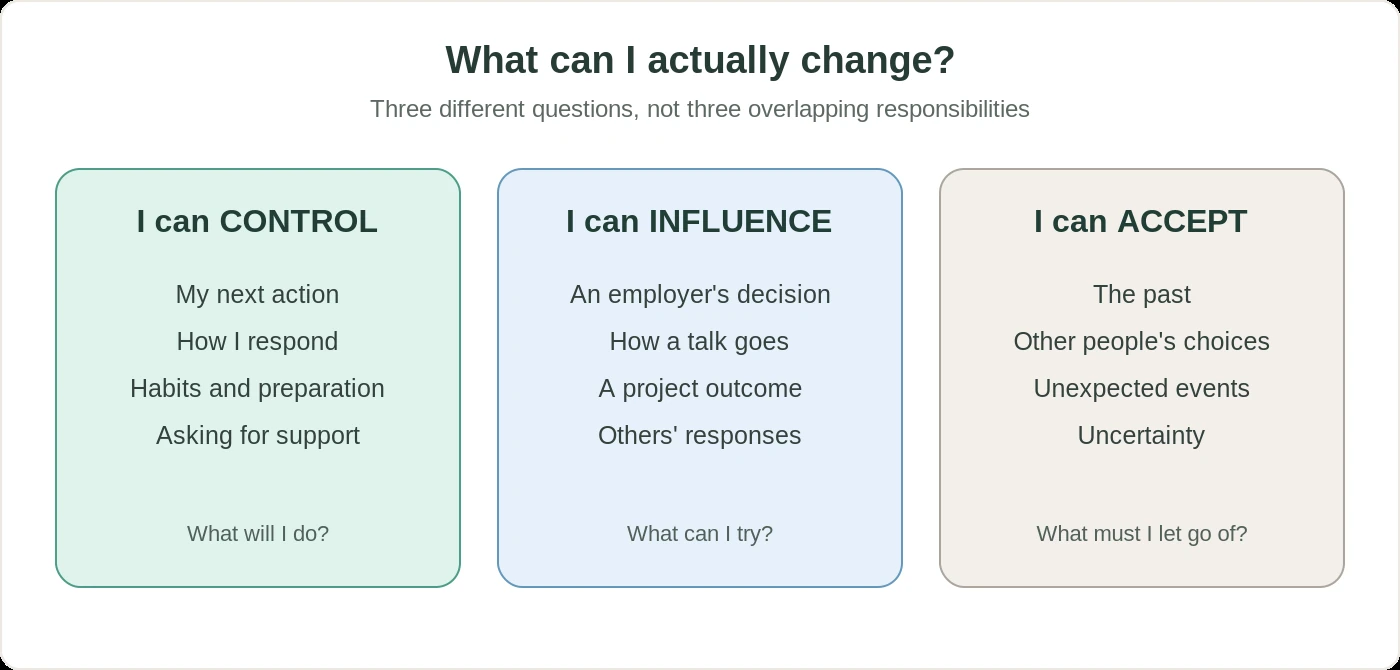
For example, you can prepare carefully for an interview and ask for feedback. You can influence your chances of being hired. You cannot guarantee the employer’s decision. Recognizing the distinction can reduce unproductive self-blame while leaving room for effort.
Step 4: Choose accountability and one useful next action
Ask what contributed to the setback, which parts were within your control, and whether anything can be repaired. Then select an action small enough to complete: make a phone call, correct a mistake, send one application, clarify a misunderstanding, or seek advice. If you struggle to continue after getting started, explore why motivation fades after starting something and how to make the next step more manageable.
For a serious error, meaningful action may involve an apology, compensation, or changing a behavior. For something outside your control, the next step might be arranging support or allowing yourself time to grieve. Not every problem can be solved immediately, and some cannot be solved by effort alone.
Step 5: Practice self-compassion without avoiding responsibility
Self-compassion does not mean claiming that an important mistake does not matter. It means acknowledging pain and imperfection without treating yourself with unnecessary cruelty. The American Psychological Association discusses self-kindness, recognition of shared human fallibility, and mindful awareness as central parts of the concept.
Instead of “I messed up; I am worthless,” try: “I’m upset because this mattered. I made a mistake, and I can take it seriously without attacking myself.”
There is research behind this approach, although it has limits. A meta-analysis by Wakelin and colleagues (2022), based on 19 papers and 1,350 participants, found a moderate reduction in self-criticism following self-compassion-related interventions relative to controls; the authors noted substantial heterogeneity and moderate study quality. Another meta-analysis by Han and Kim (2023) included 56 randomized trials and found small-to-medium improvements in depressive symptoms, anxiety, and stress at post-treatment, but overall risk of bias was high. Self-compassion is a useful practice for some people, not a guaranteed treatment or a substitute for appropriate care.
A 10-minute reset for when you feel like a failure
If you are overwhelmed, you may not need to resolve your career, finances, relationships, and future today. This brief exercise is a way to organize your next response. Take longer if you need to; it is not a test you can fail.
- Minutes 1–2: Name the feeling. Write: “Right now I feel like a failure because …” Let yourself finish the sentence.
- Minutes 3–4: List the facts. Write only what happened. Set aside words such as “always,” “never,” “everything,” and “worthless,” which often go beyond the evidence.
- Minutes 5–6: Question the identity label. Ask: “Would this event prove that another person is a failure? What information am I leaving out?”
- Minutes 7–8: Find one lesson or need. Maybe there is a habit to change, a conversation to have, a boundary to set, or a need for rest or support. It is fine if you do not have the answer yet.
- Minutes 9–10: Decide on one manageable action. Write the first step and when you will take it. That might be emailing someone, reviewing a budget, arranging an appointment, or going for a short walk.
The goal is not to feel instantly confident. It is to move from a painful verdict about yourself to a clearer view of the situation and an achievable next step. For a broader, private self-reflection exercise, you can also explore Rihzen’s Inner Mirror; it is not a diagnostic assessment.
What if you really did fail at something important?
Sometimes the honest answer is that you made a bad decision, hurt someone, neglected a responsibility, lost money, or did not perform as well as you needed to. The answer is not to deny it. But there is a difference between taking responsibility for an action and reducing your entire identity to that action.
A constructive response can include four things:
- Accountability: Name what went wrong without excuses.
- Repair: Address any harm you can reasonably put right.
- Learning: Identify a specific change you can make.
- Self-respect: Recognize that a serious mistake is not the whole story of your life.
For example: “I handled that conversation badly. I need to apologize and listen to how it affected the other person. I also need to work on how I respond when I am frustrated.” That statement is more honest, and more useful, than either “I did nothing wrong” or “I am beyond improvement.”
When should you seek professional help?
If the feeling of failure is persistent, intense, hard to interrupt, or is affecting work, study, relationships, or basic self-care, consider speaking with a doctor or qualified mental-health professional. You do not need a diagnosis or a perfect explanation for your feelings before asking for help.
In particular, seek support if you notice several of the following:
- Feeling low, hopeless, guilty, or worthless much of the time.
- Losing interest in activities you previously enjoyed.
- Substantial changes in sleep, appetite, or energy.
- Difficulty concentrating, making decisions, or keeping up with daily tasks.
- Increasing withdrawal from other people or relying more on alcohol or other substances to cope.
- Worry or self-criticism that feels difficult to control, or symptoms that are getting worse.
The NIMH’s guidance on when to seek mental-health help recommends professional assessment when symptoms are severe, prolonged, worsening, or substantially affect everyday functioning. If you are unsure, a primary-care clinician can be a useful starting point.
Can therapy help when you constantly feel like a failure?
It can. Psychotherapy may help people examine habitual self-criticism, respond differently to distressing thoughts, address relationship difficulties, and develop coping and problem-solving skills. Different approaches suit different needs.
A 2022 review by Galloway and colleagues of 15 randomized trials found medium-to-large effects of cognitive behavioral therapy (CBT) for perfectionism on several perfectionism measures. In adults receiving psychotherapy for depression, a 2023 meta-analysis by Bhattacharya and colleagues found moderate improvements in self-esteem, although the trials had substantial heterogeneity and risk-of-bias limitations. These findings suggest treatment can help, but they do not predict any particular individual’s result.
Starting the conversation can be simple: “I’ve been feeling unusually hard on myself, and it’s affecting my everyday life. Could we talk about what might help?”
When feelings of failure become a safety concern
Feeling unsuccessful is different from believing your life has no value or that others would be better off without you. If you are thinking about suicide or self-harm, or you feel unable to keep yourself safe, seek immediate support rather than relying on a self-help exercise.
In the United States, call or text 988 for the Suicide & Crisis Lifeline. In a life-threatening emergency, call 911 or go to the nearest emergency department. Outside the United States, contact your local emergency number, the nearest emergency department, or an available local crisis service. If possible, tell someone you trust what is happening and ask them to stay with you while you get help.
Frequently asked questions
Why do I feel like a failure even when I have not failed?
Your expectations may be unrealistic, you may be comparing your life with other people’s milestones, or stress and harsh self-criticism may be shaping how you interpret ordinary uncertainty. Persistent worthlessness can also occur with depression. The feeling deserves attention, but it is not proof that the conclusion is accurate.
Why do I feel like a failure at 20, 30, 40, 50, or later?
There is no universal age by which everyone should have established a career, financial security, a relationship, or a clear direction. Consider which milestone is troubling you and whether the deadline came from your own values, social expectations, or comparison. Your next realistic goal matters more than meeting someone else’s timetable.
Why do I feel like a failure at work?
A missed promotion, criticism, job rejection, low pay, or an uncertain career path can make professional setbacks feel personal. Separate what you can improve, such as skills or preparation, from factors you do not control, such as an employer’s budget or hiring decisions. If the feeling is constant, consider whether overwork, burnout, or an unhealthy workplace is contributing.
Why do I feel like a failure in relationships?
A breakup, rejection, repeated conflict, or difficulty finding a partner can trigger doubts about your worth. A relationship outcome is shaped by more than one person’s needs, choices, and circumstances. You can reflect honestly on your own behavior without treating the entire experience as evidence that you are unlovable.
Is feeling like a failure a sign of depression?
Not by itself. Disappointment and self-doubt are common experiences. Persistent feelings of worthlessness, especially with low mood, loss of pleasure, sleep or appetite changes, and difficulty functioning, can be among the signs of depression. A healthcare professional can assess what is happening.
How can I stop comparing myself with everyone else?
Notice when comparison begins and how it affects your behavior. Ask what, if anything, is useful to learn. Reduce exposure to accounts or situations that consistently intensify self-judgment, and measure progress against goals that reflect your actual circumstances and priorities.
Is self-compassion just making excuses?
No. You can acknowledge that you made a mistake, apologize or repair harm, and still refuse to speak to yourself with contempt. Self-compassion is about how you respond to difficulty, not about avoiding responsibility.
How do I rebuild confidence after failure?
Focus on evidence and action rather than demanding that you suddenly feel confident. Identify skills you already have, review what did not work, take one meaningful step, and allow confidence to develop from practice. Professional support may help if fear or self-criticism prevents you from moving forward.
The bottom line
The feeling “I am a failure” can be an understandable response to disappointment, comparison, pressure, or emotional distress. It is not an accurate summary of an entire person.
If something went wrong, name it and deal with it as fairly as you can. If your expectations are unrealistic, reconsider them. If self-criticism has become relentless, respond with more precision and less cruelty. And if you are struggling to function or feel safe, seek appropriate help.
You do not have to prove today that every part of your life is successful. A more useful question is: “What is one honest, constructive thing I can do next?”
Sources and further reading
- National Institute of Mental Health. Depression. Symptoms, diagnosis, and treatment.
- National Institute of Mental Health. My Mental Health: Do I Need Help? Guidance on seeking support.
- National Institute of Mental Health. Generalized Anxiety Disorder: What You Need to Know.
- National Institute of Mental Health. Psychotherapies.
- Callaghan, T., Greene, D., Shafran, R., Lunn, J., & Egan, S. J. (2024). The relationships between perfectionism and symptoms of depression, anxiety and obsessive-compulsive disorder in adults: A systematic review and meta-analysis. Cognitive Behaviour Therapy, 53(2), 121–132. https://doi.org/10.1080/16506073.2023.2277121
- Smith, M. M., Sherry, S. B., Ray, C., Hewitt, P. L., & Flett, G. L. (2021). Is perfectionism a vulnerability factor for depressive symptoms, a complication of depressive symptoms, or both? A meta-analytic test of 67 longitudinal studies. Clinical Psychology Review, 84, 101982. https://doi.org/10.1016/j.cpr.2021.101982
- McCarthy, P. A., & Morina, N. (2020). Exploring the association of social comparison with depression and anxiety: A systematic review and meta-analysis. Clinical Psychology & Psychotherapy, 27(5), 640–671. https://doi.org/10.1002/cpp.2452
- Le Blanc-Brillon, J., Fortin, J.-S., Lafrance, L., & Hétu, S. (2025). The associations between social comparison on social media and young adults’ mental health. Frontiers in Psychology, 16, 1597241. https://doi.org/10.3389/fpsyg.2025.1597241
- Dougall, I., Vasiljevic, M., Wright, J. D., & Weick, M. (2024). How, when, and why is social class linked to mental health and wellbeing? A systematic meta-review. Social Science & Medicine, 343, 116542. https://doi.org/10.1016/j.socscimed.2023.116542
- Wakelin, K. E., Perman, G., & Simonds, L. M. (2022). Effectiveness of self-compassion-related interventions for reducing self-criticism: A systematic review and meta-analysis. Clinical Psychology & Psychotherapy, 29(1), 1–25. https://doi.org/10.1002/cpp.2586
- Han, A., & Kim, T. H. (2023). Effects of self-compassion interventions on reducing depressive symptoms, anxiety, and stress: A meta-analysis. Mindfulness, 14, 1553–1581. https://doi.org/10.1007/s12671-023-02148-x
- Galloway, R., Watson, H., Greene, D., Shafran, R., & Egan, S. J. (2022). The efficacy of randomised controlled trials of cognitive behaviour therapy for perfectionism: A systematic review and meta-analysis. Cognitive Behaviour Therapy, 51(2), 170–184. https://doi.org/10.1080/16506073.2021.1952302
- Bhattacharya, S., Kennedy, M., Miguel, C., Tröger, A., Hofmann, S. G., & Cuijpers, P. (2023). Effect of psychotherapy for adult depression on self-esteem: A systematic review and meta-analysis. Journal of Affective Disorders, 325, 572–581. https://doi.org/10.1016/j.jad.2023.01.047
- Clay, R. A. (2016). CE corner: Why you need more self-compassion. American Psychological Association, Monitor on Psychology, 47(8).
Information notice: This article is general educational information, not a diagnosis or a substitute for personalized medical or mental-health care. Research findings describe group-level patterns and do not determine the causes of an individual’s feelings.